
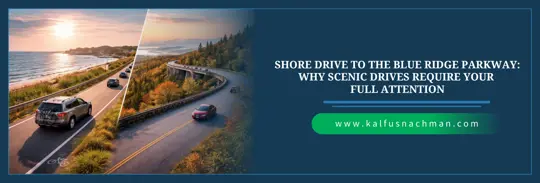
Spring in Virginia brings something special—the return of the open road. As temperatures climb, locals and visitors alike flock to the state’s most beloved scenic routes. In Virginia Beach, Shore Drive offers sweeping views of the Chesapeake Bay, with cyclists, joggers, and families enjoying the waterfront. In the western part of the state, the Blue Ridge Parkway unfurls its breathtaking mountain vistas, drawing motorcyclists and leaf-peepers from across the country. But with warmer weather comes a dangerous trend: drivers treating these beautiful roads as backdrops for photos, turning a relaxing drive into a recipe for tragedy.
Scenic Roads, Serious Risks: The Danger of Distracted Driving
Scenic roads naturally encourage drivers to slow down, look around, and take in their surroundings. While that may seem harmless, “looky-loo” driving — where attention shifts away from the road — can be just as dangerous as texting or using a phone.
Drivers may glance at the ocean along Shore Drive or mountain overlooks on the Blue Ridge Parkway, but even a few seconds of distraction can lead to serious consequences. A Shore Drive scenic drive crash, for example, may occur when a driver fails to notice a pedestrian crossing or a vehicle slowing ahead.
On winding mountain roads, the risks are even greater. Curves, elevation changes, and limited guardrails leave little room for error. However, enjoying the view does not excuse a failure to drive with due care—an admission that becomes critical evidence for injured victims seeking justice.
Why “Scenic” Doesn’t Mean “Safe”
The allure of Virginia’s scenic drives makes them uniquely dangerous. Drivers often let their guard down, treating the route as a leisurely tour rather than an active driving task. The reality is that roads like Shore Drive and the Blue Ridge Parkway require more concentration, not less.
Mixed traffic: Shore Drive hosts cars, trucks, cyclists, and pedestrians in proximity.
Unpredictable stops: Drivers are constantly slow to turn into parks, businesses, or scenic overlooks.
Curves and elevation: The Parkway’s tight turns and mountain grades demand precise vehicle control.
Cognitive load: Taking a photo or even mentally “checking out” to admire the view diverts cognitive resources from hazard detection.
When a driver chooses to snap a picture instead of watching the road, they are making a decision that can end someone else’s life. Virginia law prohibits distracted driving, and courts hold drivers accountable when that distraction causes harm.
Safe Virginia Scenic Driving Tips
You can enjoy Virginia’s beautiful roads without putting yourself or others at risk:
Pull over safely: If you want to take a picture, find a designated overlook or parking area. Never stop in a travel lane.
Put the phone away: Stow your device in the glove box or use “do not disturb while driving” mode.
Stay alert for vulnerable users: On Shore Drive, expect cyclists and pedestrians; on the Parkway, watch for motorcycles and wildlife.
Share the road: Allow extra space for vehicles that may be stopping unexpectedly to enjoy the view.
Your Advocate When Distraction Causes Harm
If you or a loved one has been injured in a crash caused by a driver who was more focused on the scenery than the road, you deserve justice. At Kalfus & Nachman, we understand the unique challenges of scenic‑route accidents—from the mix of local and tourist drivers to the importance of preserving evidence quickly. We bring the same commitment to every case, fighting to hold distracted drivers accountable and to secure the compensation you need to recover.
Don’t let someone else’s moment of distraction define your future. Contact us today for a free, confidential consultation at 855-880-8163. We’ll listen to your story, explain your rights, and stand with you every step of the way.