
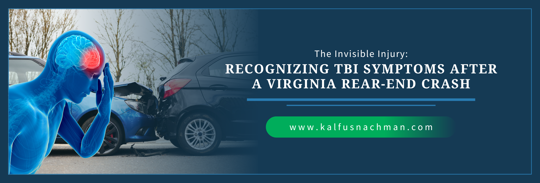
A rear-end crash can look minor—no airbags deployed, low visible damage, and everyone walks away. But for many Virginians, the real injuries don’t show up right away. Recognizing TBI Symptoms After a Virginia Rear-End Crash can be the difference between proper recovery and months of unexplained pain, confusion, and emotional distress. Traumatic brain injuries (TBIs), including concussions, are often overlooked in these collisions and go undiagnosed until symptoms worsen.
Understanding how these injuries occur—and how to protect your legal rights—is essential.
Why Rear-End Crashes Can Cause Hidden Brain Injuries
The sudden forward-and-back motion during a rear-end collision causes the brain to pound inside the skull, even when the head never hits anything. This rapid acceleration and deceleration may lead to what medical professionals call a mild TBI or concussion.
Many victims of TBI in Virginia Rear-End Crash cases dismiss early symptoms as stress or soreness rather than signs of neurological trauma.
Unfortunately, this type of hidden brain injury in car accident cases may worsen without early diagnosis and treatment. Delays can lead to ongoing headaches, memory loss, mood changes, or problems concentrating—often interfering with work, school, and daily life.
Early Symptoms of an Undiagnosed Concussion
After a rear-end crash, be alert for signs of an undiagnosed concussion, including:
- Persistent headaches
- Dizziness, nausea, or balance issues
- Brain fog or difficulty concentrating
- Memory problems or confusion
- Sensitivity to light or noise
- Personality or mood changes
- Fatigue or disrupted sleep
These symptoms don’t always appear immediately—they may develop days or even weeks later. This delay makes medical documentation highly important for linking your condition to the collision.
Local Challenges: Evidence & Multi-Car Collisions
Virginia roadways—especially congested areas maintained by the Virginia Department of Transportation (VDOT)—experience frequent rear-end chain collisions. Multi-vehicle pileups, sudden stop traffic, and construction zone backups complicate fault determination.
Vehicles can be moved quickly after accidents, leading to the loss of critical evidence, such as skid marks and car positions. Preserving traffic camera footage and dashcam videos promptly is vital to supporting injury claims.
Virginia TBI lawyers know how to promptly submit preservation requests to VDOT and local agencies to prevent footage overwrites, ensuring this valuable data remains available to support injury claims.
Why Medical & Legal Documentation Matters
Insurance companies often argue that “minor crashes cause minor injuries.” Without immediate and well-documented medical care, they may try to dismiss or undervalue claims related to TBI in Rear-End Crash Virginia accidents.
This is where experienced Virginia rear-end crash attorneys step in. They help connect the victim's medical records, neurological evaluations, and accident reconstruction data to prove that the injury directly resulted from the collision, and symptoms are medically consistent with TBI.
This thorough documentation counters insurance tactics aimed at minimizing legitimate claims.
What to Do If You Suspect a TBI in a Rear-end Crash
If you’ve been involved in a rear-end collision—even one that seemed minor—you should:
- Seek immediate medical evaluation and neurological screening.
- Report all symptoms, even subtle ones, to your provider.
- Keep records of follow-up treatment and lifestyle changes.
- Avoid recorded statements to insurers.
- Consult experienced Virginia TBI lawyers as soon as possible.
If you or a loved one may be suffering from a Hidden Brain Injury in a VA Car Crash, don’t wait for symptoms to worsen. Contact Kalfus & Nachman today for a free consultation with our trusted Virginia rear-end crash attorneys. We understand both the medical realities of brain injuries and the local legal challenges involved in protecting your right to full, fair compensation. Call: 855-880-8163